Cryospheric Dynamics in the Water Cycle: Glacial Mass Balance, Snowpack Hydrology, and Permafrost Thaw Feedbacks

Monumental alpine glacier carved between jagged mountain peaks feeding liquid meltwater streams

1. The Cryosphere as Earth’s Master Freshwater Frozen Reservoir The cryosphere—encompassing all portions of the Earth system where water is perennially or seasonally frozen in the form of continental ice sheets, ice caps, alpine glaciers, seasonal snowpack, sea ice, lake ice, and subterranean permafrost—constitutes the ultimate physical storage buffer in the global hydrological cycle. Holding … Read more

Evapotranspiration Mechanics: Penman-Monteith Modeling, Stomatal Conductance, and Latent Heat Energy Fluxes

Sunlit agricultural field and dense forest canopy releasing water vapor through evapotranspiration

1. Biophysical Architecture of Terrestrial Evapotranspiration Evapotranspiration (ET) represents the coupled biophysical process whereby liquid water is transferred from the terrestrial surface into the atmosphere as water vapor. Operating at the critical interface of the soil-plant-atmosphere continuum (SPAC), evapotranspiration combines two distinct physical pathways: evaporation—the purely physical vaporization of water from bare soil surfaces, wet … Read more

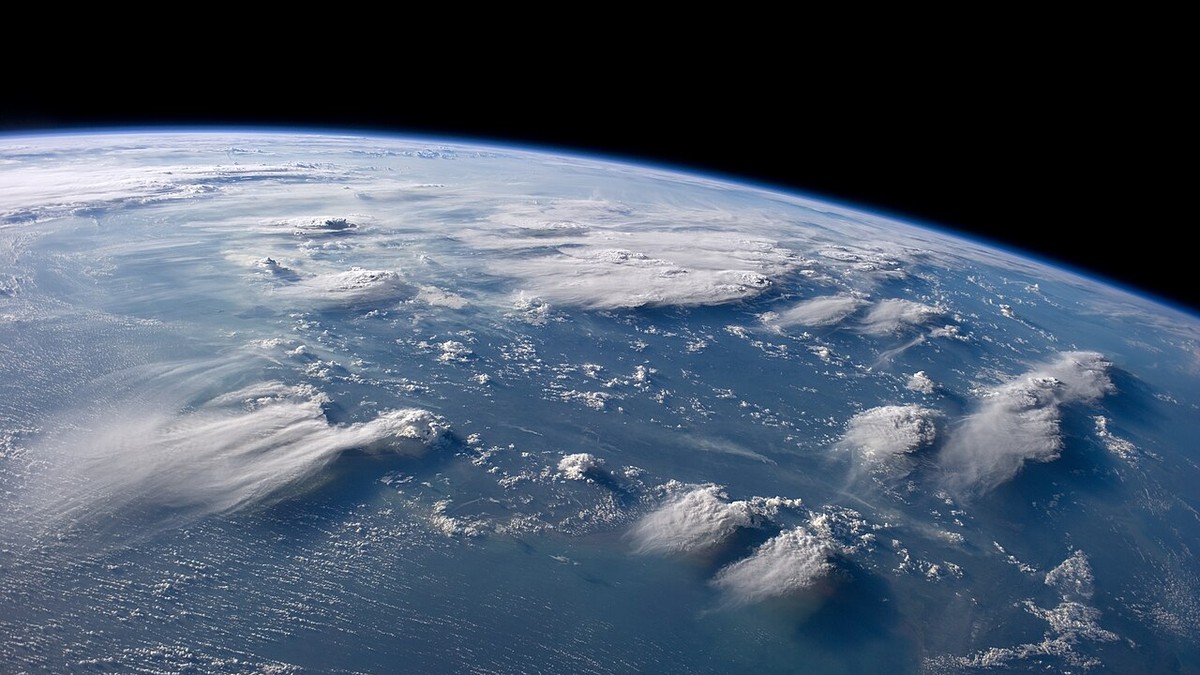
Precipitation Physics, Cloud Microphysics, and Orographic Lifting: Droplet Nucleation and Storm Dynamics

Towering cumulonimbus storm cloud illustrating convective updrafts and precipitation nucleation

1. Atmospheric Thermodynamics and Adiabatic Cloud Genesis Precipitation represents the primary delivery mechanism replenishing all terrestrial freshwater systems on Earth. The journey of water from an invisible, dispersed atmospheric gas to liquid raindrops or solid snowflakes is governed by rigorous thermodynamic transformations occurring within ascending, cooling air parcels. The genesis of all convective, frontal, and … Read more

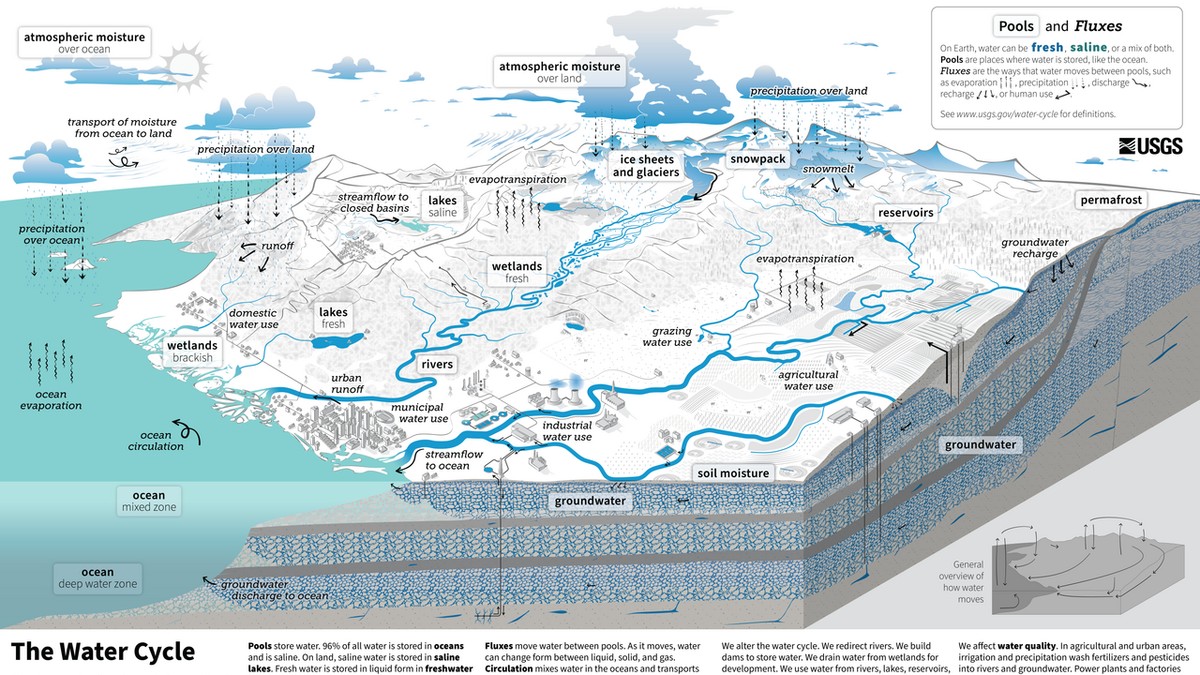
The Global Hydrological Cycle: Quantitative Fluxes, Atmospheric Moisture Transport, and Terrestrial Water Budgets

Scientific diagram of the global water cycle illustrating evaporation, precipitation, and runoff

1. Planetary Thermomechanics of the Global Water Cycle The global hydrological cycle represents the most immense physical mass-transport and thermodynamic energy-distribution engine operating within the Earth system. Driven ceaselessly by incident solar irradiance and modulated by planetary gravitation, the cycle continuously circulates water through its vapor, liquid, and solid phases across the atmosphere, oceans, terrestrial … Read more