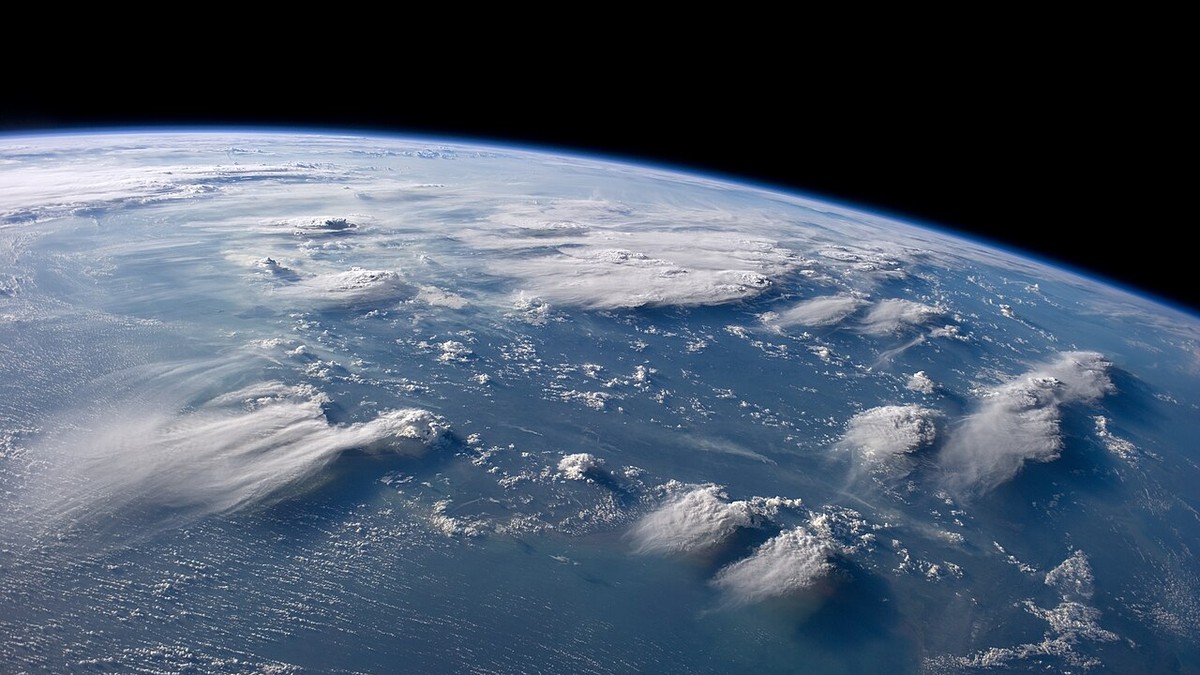
1. Atmospheric Thermodynamics and Adiabatic Cloud Genesis
Precipitation represents the primary delivery mechanism replenishing all terrestrial freshwater systems on Earth. The journey of water from an invisible, dispersed atmospheric gas to liquid raindrops or solid snowflakes is governed by rigorous thermodynamic transformations occurring within ascending, cooling air parcels. The genesis of all convective, frontal, and orographic clouds begins with the physical process of adiabatic expansion.
When an air parcel is forced to ascend—whether by surface thermal buoyancy, frontal wedging, or topographic barriers—it encounters progressively lower ambient atmospheric pressure. In accordance with the ideal gas law and the first law of thermodynamics, the ascending air parcel expands against its surroundings. Because the timescale of parcel ascent is vastly faster than the rate of thermal conduction with surrounding ambient air, this expansion occurs adiabatically: the parcel performs work on its environment using its own internal thermal kinetic energy, causing its temperature to decline steadily.
The rate of this cooling with altitude is defined by the Dry Adiabatic Lapse Rate (DALR), mathematically derived as: Gamma_d = g / c_p ≈ 9.8°C per 1,000 meters of vertical ascent (where g is gravitational acceleration and c_p is the specific heat capacity of dry air). As the parcel cools at this constant rate, its relative humidity (RH = e / e_s) rises rapidly because saturation vapor pressure (e_s) plunges exponentially with declining temperature, as dictated by the Clausius-Clapeyron equation.
The altitude at which relative humidity reaches exactly 100% (where ambient temperature cools to the dew point temperature, T = T_d) is designated as the Lifting Condensation Level (LCL). At the LCL, net condensation initiates, and the physical base of the cloud forms. Above the LCL, the latent heat of condensation (L_v ≈ 2.5 × 10^6 J/kg) is released into the parcel, counteracting adiabatic cooling and reducing the lapse rate to the Moist Adiabatic Lapse Rate (MALR): Gamma_m ≈ 4.0°C to 7.0°C per 1,000 meters, injecting thermal buoyancy that accelerates convective updrafts high into the troposphere.
💧 Thermodynamic Milestone: The Release of Latent Heat
Condensation transforms water vapor into cloud droplets, releasing 2,500 Joules of thermal energy per gram of water condensed. In a severe supercell thunderstorm, this latent heat release releases the energy equivalent of several multi-megaton thermonuclear detonations, powering vertical updrafts exceeding 50 meters per second.
2. Cloud Microphysics: Köhler Theory and Aerosol Cloud Nucleation
A widespread misconception assumes that water vapor automatically condenses into liquid droplets the moment relative humidity reaches 100%. In reality, pure water vapor cannot condense into droplets without supersaturations exceeding 400% to 500% (homogeneous nucleation) due to the immense surface tension of microscopic embryo droplets. The formation of natural clouds at relative humidities barely exceeding 100% (supersaturations of only 0.1% to 1.0%) requires the presence of microscopic airborne solid or liquid particles known as Cloud Condensation Nuclei (CCN).
Cloud droplet nucleation on soluble CCN is governed by Köhler Theory (1936), which integrates two opposing thermodynamic physical effects: the Kelvin curvature effect and the Raoult solute effect. The modified saturation vapor pressure ratio over an aqueous solution droplet of radius r is formulated as:
ln(e / e_s) = (2 · σ_w) / (ρ_w · R_v · T · r) – (ν · Φ_s · m_s · M_w) / (M_s · [4/3 · π · ρ_w · r³])
Where the first term represents the Kelvin Effect: the convex curvature of a microscopic droplet increases the surface energy and chemical potential of water molecules, increasing the vapor pressure required to prevent evaporation. The second term represents the Raoult Effect: dissolving a soluble solute (such as sea-salt sodium chloride, NaCl, or agricultural ammonium sulfate, (NH4)2SO4) lowers the mole fraction and chemical activity of the water molecules, dramatically depressing the equilibrium vapor pressure required for condensation.
The superposition of these two terms generates the iconic Köhler Curve, which features a critical radius (r_c) and a critical supersaturation (S_c). When an ascending air parcel cools and ambient supersaturation surpasses S_c, the droplet passes the peak of the Köhler curve; it undergoes unconstrained, runaway condensation growth, transforming into an activated cloud droplet.
| Precipitation Mechanism | Dominant Cloud Phase | Temperature Regime | Microphysical Process | Typical Precipitation Form |
|---|---|---|---|---|
| Collision-Coalescence | Warm Clouds (Liquid only) | T > 0°C (Tropical & Low Stratus) | Hydrodynamic capture of small droplets by large collectors | Warm rain; tropical torrential downpours; drizzle |
| Wegener-Bergeron-Findeisen | Mixed-Phase Clouds | -40°C < T < 0°C | Vapor pressure differential: ice crystals grow at expense of droplets | Snowflakes, sleet, cold frontal rain, stratiform rain |
| Accretion / Riming | Mixed-Phase Convective | -20°C < T < 0°C | Supercooled droplets freeze instantly upon colliding with ice | Graupel (snow pellets); hailstone concentric shells |
| Homogeneous Freezing | Pure Ice Cirrus | T < -38.5°C (Upper Troposphere) | Spontaneous nucleation of pure water droplets without INPs | High-altitude cirrus ice crystals; fallstreaks |
| Orographic Seeder-Feeder | Multi-Layered Orographic | Variable (Mountain barriers) | Upper seeder ice cloud drops snow into lower orographic feeder cloud | Heavily amplified mountain precipitation |
3. Droplet Growth Dynamics: Collision-Coalescence vs. The Bergeron Process
Once activated, cloud droplets grow via condensation; however, condensation growth is inherently self-limiting. Because the rate of diffusion growth is inversely proportional to droplet radius (dr/dt ∝ 1/r), condensation rapidly homogenizes droplet sizes around 10 to 20 micrometers (µm). A typical raindrop possesses a radius of approximately 1,000 µm (1 millimeter)—representing a volumetric mass increase of over one million times relative to a cloud droplet. Condensation alone would require days to produce a single raindrop. Rapid precipitation formation relies upon two powerful microphysical growth mechanisms: Collision-Coalescence and the Wegener-Bergeron-Findeisen Process.
Collision-Coalescence in Warm Clouds: In clouds warmer than 0°C (ubiquitous in the tropics), precipitation is driven by aerodynamic collision and coalescence. Slight variations in CCN size create a spectrum of droplet sizes. Larger droplets have higher terminal fall velocities (governed by Stokes’ law and turbulent drag): v_t ∝ r² for small droplets. As a large ‘collector drop’ falls through a cloud of smaller droplets, its gravitational sweep-out volume sweeps up smaller droplets in its path. If the hydrodynamic collision efficiency (E_coll) and coalescence efficiency (E_coal) are favorable, the droplets fuse, accelerating the collector drop’s fall velocity in an exponential runaway growth loop that produces mature raindrops within 20 to 30 minutes.
The Wegener-Bergeron-Findeisen (WBF) Process in Cold Clouds: In mixed-phase clouds between 0°C and -40°C, liquid water droplets and solid ice crystals coexist in an unstable thermodynamic truce. Liquid water does not freeze at 0°C without specialized Ice Nucleating Particles (INPs)—rare mineral dusts (kaolinite, feldspar) or biological aerosols (Pseudomonas syringae bacteria)—allowing droplets to persist in a metastable supercooled state down to -38.5°C.
The physics of the WBF process hinges on a fundamental thermodynamic truth: the saturation vapor pressure over liquid water (e_sw) is substantially greater than the saturation vapor pressure over solid ice (e_si) at identical sub-freezing temperatures. At -12°C, this vapor pressure difference reaches its maximum (~0.27 hPa). Consequently, when ice crystals and supercooled droplets coexist, the ambient vapor pressure is supersaturated with respect to the ice crystal, but subsaturated with respect to the liquid droplet. Water molecules evaporate rapidly from the liquid droplets, diffuse across the microscopic vapor gradient, and deposit directly onto the ice crystal via sublimation/deposition. The ice crystals grow rapidly into intricate dendritic snowflakes at the direct expense of the shrinking supercooled droplets, falling under gravity and melting into rain before striking the ground.
Graupel and Hailstone Accretion Mechanics
When an ice crystal grows massive enough to fall through a dense cloud of supercooled liquid droplets, it undergoes riming (accretion). Supercooled droplets freeze instantaneously upon contact with the ice crystal, trapping microscopic air bubbles to form soft, white pellets of graupel. In violent convective storm updrafts exceeding 30 to 50 m/s, graupel pellets are suspended in the storm core for extended durations, accumulating alternating layers of wet and dry accreted ice to form massive, destructive hailstones exceeding baseball size.
💧 Microphysical Law: The Bergeron Vapor Pressure Differential
Because hydrogen bonds in ice are more rigid and stable than in liquid water, water molecules escape from an ice lattice with greater difficulty. In mixed-phase clouds, this thermodynamic disparity forces supercooled liquid droplets to literally evaporate into adjacent growing snowflakes.
4. Orographic Lifting and the Seeder-Feeder Mechanism
Topography represents one of the most potent meteorological forcing mechanisms on planet Earth. When moisture-laden horizontal atmospheric winds encounter a topographic mountain barrier, the air mass is physically obstructed, forcing it to ascend the windward slope—a phenomenon termed orographic lifting.
As the air ascends the windward mountain face, forced adiabatic expansion cools the parcel past its Lifting Condensation Level, triggering intense cloud formation and torrential orographic precipitation. The efficiency of orographic precipitation is vastly amplified by the Seeder-Feeder Mechanism (Bergeron, 1965). As moist air ascends the mountain slope, it creates a low-level, dense, liquid-water-rich cloud capping the terrain (the feeder cloud). Simultaneously, an upper-level synoptic frontal cloud (the seeder cloud) drifts overhead, releasing ice crystals and snowflakes that fall through the lower feeder cloud, scavenging the supercooled liquid droplets via riming and collision-coalescence, producing monumental rainfall enhancements on windward ridges.
Once the air parcel crests the mountain summit, its moisture content has been largely wrung out. As the parcel descends the leeward slope, it undergoes adiabatic compression, warming at the Dry Adiabatic Lapse Rate (9.8°C/km)—a rate substantially faster than its moist ascent rate. The descending air becomes extremely warm, dry, and subsaturated, producing a prominent rain shadow desert on the leeward flank of the mountain range (e.g., the Great Basin east of the Sierra Nevada, the Atacama Desert east of the Chilean Coast Range, and the Patagonian Steppe east of the Andes).
These warm, dry leeward downslope winds—known globally as Foehn, Chinook, or Santa Ana winds—can cause localized air temperatures to spike by 15°C to 25°C within minutes, rapidly sublimating snowpacks and priming lowland landscapes for catastrophic wildfire ignition.
5. Synoptic and Mesoscale Convective Architectures
Beyond topographic forcing, precipitation is organized into large-scale atmospheric architectures classified across synoptic and mesoscale domains:
Extratropical Frontal Systems: Operating on synoptic scales (> 1,000 km), frontal precipitation is driven by baroclinic instability along the polar front, where cold polar air masses collide with warm maritime tropical air. Along a warm front, buoyant warm air gently glides upward over a retreating wedge of cold air along a shallow slope (1:200), producing widespread, prolonged, stratiform precipitation (nimbostratus) spanning hundreds of kilometers. Along a cold front, dense cold air acts as a steep hydraulic snowplow (slope 1:50), wedging violently beneath warm air to trigger narrow lines of intense convective thunderstorms and squall lines.
Mesoscale Convective Systems (MCSs): Spanning 100 to 500 kilometers, MCSs are organized complexes of convective thunderstorms that aggregate and persist for 12 to 36 hours. Driven by low-level nocturnal jet streams and cold-pool rear-inflow jets, MCSs (including Bow Echoes and Mesoscale Convective Complexes, MCCs) produce over 50% of warm-season agricultural precipitation across the North American Great Plains, the South American Pampas, and the West African Sahel, while generating severe straight-line windstorms (derechos).
Tropical Convective Regimes: Along the Intertropical Convergence Zone (ITCZ), intense solar heating drives deep tropospheric convection. Unorganized cumulus clouds aggregate into massive ‘hot towers’ reaching altitudes of 15 to 18 kilometers, punching through the tropopause and discharging monumental monsoonal deluge rains that nourish global equatorial rainforests.
6. Anthropogenic Modulation: Cloud Seeding, Urban Rain Islands, and Aerosol Forcing
Human activities are directly modulating cloud microphysics and precipitation patterns across local, regional, and continental scales. The most deliberate intervention is weather modification (cloud seeding). Operational cloud seeding programs deploy aircraft or ground-based flare generators to inject artificial Ice Nucleating Particles—primarily Silver Iodide (AgI)—into supercooled mixed-phase orographic clouds. Because silver iodide possesses a crystalline hexagonal lattice almost identical to natural ice (interatomic spacing mismatch < 1.5%), it triggers the Bergeron process at temperatures as warm as -4°C, stimulating snowfall accumulation over critical mountain watersheds by 5% to 15%.
In urban landscapes, human infrastructure alters precipitation through the Urban Rain Island (URI) effect. The combination of the Urban Heat Island (UHI, elevating thermal convective updrafts), extreme surface aerodynamic roughness from skyscrapers (forcing mechanical convergence), and high industrial aerosol emissions generates localized precipitation enhancements of 10% to 28% downwind of major metropolitan centers (such as Atlanta, Houston, and Tokyo).
Conversely, regional particulate aerosol pollution from coal-fired power plants, vehicular exhaust, and biomass burning generates the Twomey Effect (first aerosol indirect effect) and the Albrecht Effect (second aerosol indirect effect). High concentrations of anthropogenic CCN distribute available cloud water among millions of unnaturally tiny droplets (r < 5 µm). Because these tiny droplets are too small to initiate collision-coalescence, cloud precipitation is suppressed, extending cloud lifetimes while preventing light rain from falling. However, when these polluted clouds eventually ascend high enough to freeze, the explosive delayed glaciation triggers hyper-violent, catastrophic flash floods.
Preserving balanced precipitation regimes requires comprehensive atmospheric governance: curtailing particulate aerosol emissions to restore natural cloud microphysical distributions, while halting greenhouse gas emissions to stabilize the planetary thermodynamic energy balances that sustain the living hydrological cycle of the Earth.